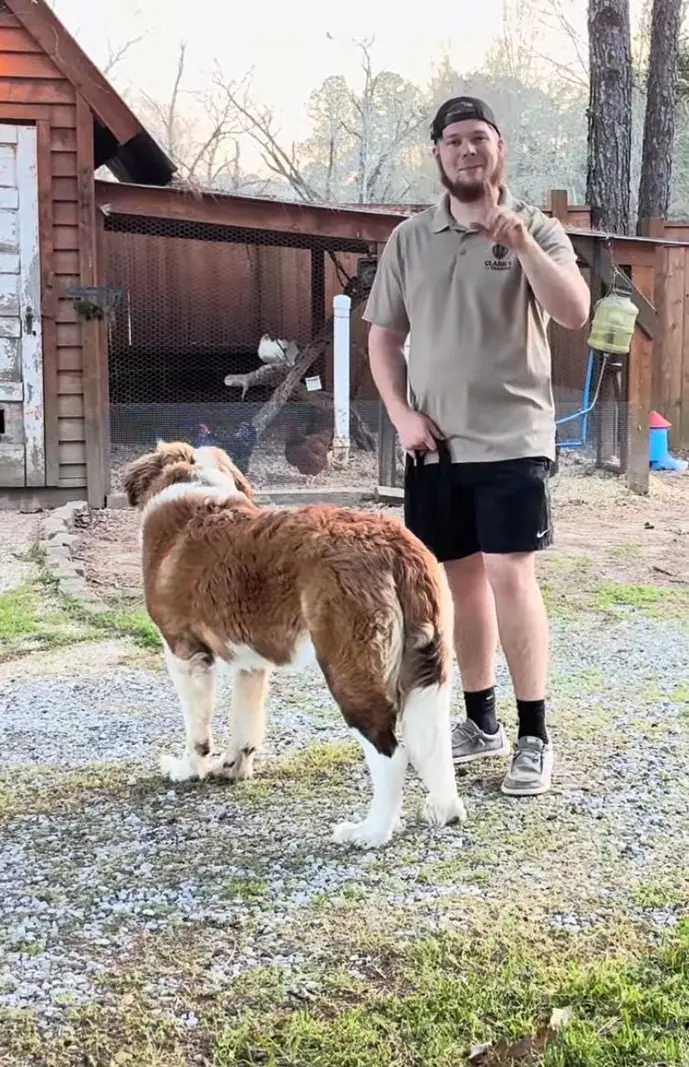
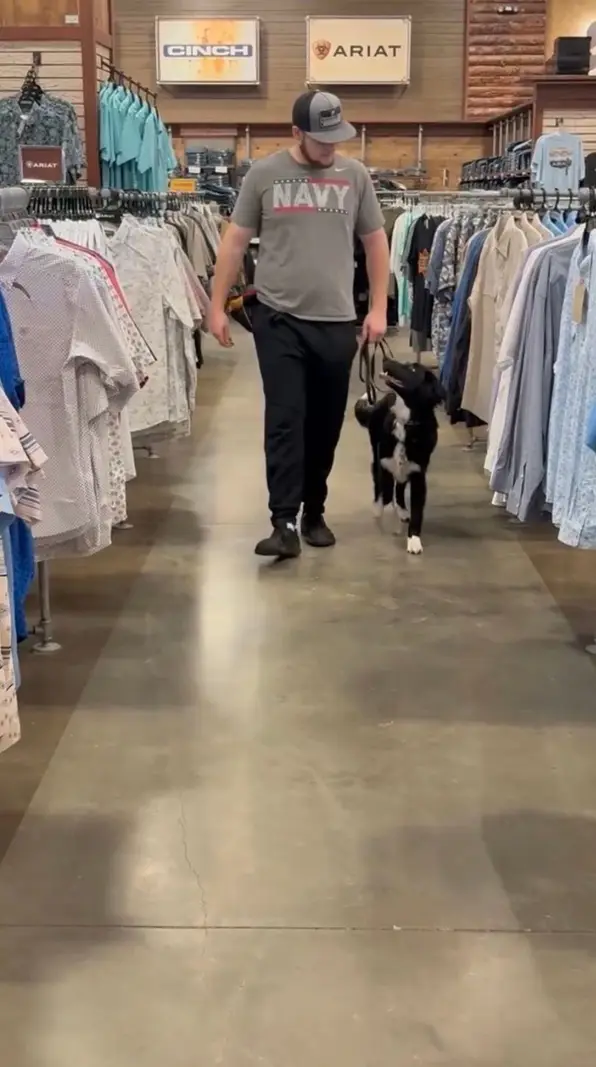
“If you are struggling with your dog, I cannot emphasize enough to please contact and consult Clark's Canine Training! Reaching out to Bailey was one of the best investments we have ever made. I highly recommend Clark's Canine Training without any reservation! Our 10-month-old, 128-pound Saint Bernard, Barnabas, completely ran the show. He pulled me down twice on two separate occasions at the park, barked ferociously at people, dogs, and just about everything, and even simple outings had become stressful. So we then simply avoided taking him anywhere. We needed a miracle and quickly! Bailey was professional, reliable, knowledgeable, honest, and truly cared about helping us. Thanks to his training, Barnabas now walks calmly beside me allowing me to set the direction and pace of the walk, loads into the Jeep when asked, ignores the geese at the pond, and can go into dog-friendly stores without barking. Most importantly, we have our home and our life back. Barnabas is now a calmer, playful, well-disciplined dog that everyone enjoys being around. Even around our 2-year-old granddaughter, he listens and responds beautifully. Much thanks to Bailey for teaching both Barnabas and myself on how to communicate with each other. There is hope, and the life you envisioned having with your dog can be obtained! Make the call—you will be so glad you did!”
The cases other trainers turn away
Reactive and Aggressive Dog Training in Central Mississippi
Reactivity and aggression are the problems families call us about most, and often after another trainer said the dog was too far gone. Lunging and barking on leash, growling at guests, fighting with the other dog in the house, resource guarding, and dogs with bite histories are all evaluated individually, because the cause, the risk, and the realistic outcome are different for every dog.
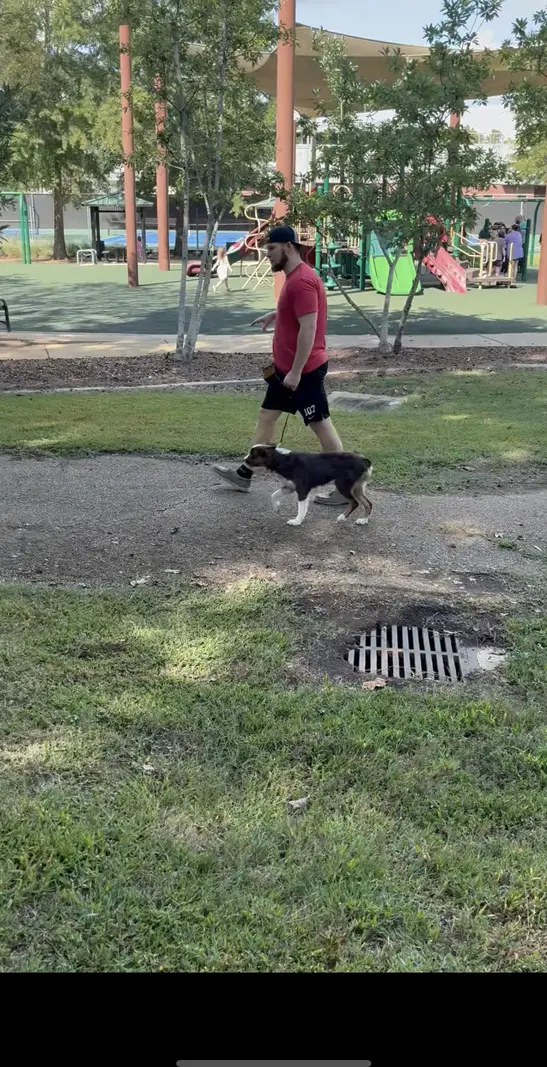
This program is a good fit if...
- Leash reactivity: barking, lunging, and spinning at dogs, people, bikes, or cars on walks
- Aggression toward strangers or guests, including dogs that have bitten
- Dog-on-dog aggression, including fights between dogs in the same home
- Resource guarding of food, toys, furniture, or people
- Fearful, shut-down, or anxious dogs whose fear turns into defensive behavior
It is probably not the right fit if...
- Owners looking for a quick fix without changing how the dog is managed and handled at home
- Dogs with a suspected medical cause for a sudden behavior change (see your veterinarian first, then call us)
At a glance
- Who it is for: dogs that lunge and bark on leash, growl at or bite guests, fight with other dogs in the home, guard food or toys, or have a bite history
- Trainer: Bailey Clark, owner of Clark's Canine Training LLC and an IACP associate member, based outside Brandon, MS
- Where: in-home lessons in Brandon, Flowood, Pearl, Richland, Jackson, Madison, Ridgeland, Clinton, and Byram; board and train families come from across Mississippi
- Programs: private lessons over 4 to 8 weeks, or a 4 to 8 week board and train in Bailey's home followed by owner lessons
- Method: balanced training, meaning structured obedience, plenty of reward, fair consequences once a dog understands, and gradual exposure to triggers
- First step: a free, no-obligation in-person evaluation. Dogs with bite histories are accepted
What reactivity and aggression usually come from
In most of the dogs we see, the behavior is not random. It is a dog that has never been taught how to handle pressure, has been allowed to make its own decisions around triggers, and has learned that barking, lunging, or biting makes the scary thing go away. Some dogs are frustrated and over-aroused; some are genuinely afraid; a few are confident and pushy. Figuring out which one you have is the point of the evaluation, and it determines everything about the plan.
How we approach it
We do not start by flooding the dog with triggers. We start by building a foundation of engagement and obedience so the dog has a job to do and a handler to look to. Heel, place, and a rock-solid down give a dog an alternative to reacting. Then we carefully reintroduce triggers at a distance the dog can handle and teach the dog that calm behavior is what works. Rewards are used constantly; consequences are used when a dog understands the expectation and chooses to ignore it, because safety and reliability matter more with these dogs than with any other.
Tools such as slip leads, prong collars, and remote collars may be part of the plan when they give a clearer, fairer way to communicate than a harness that the dog drags you around in. Every tool is introduced to the dog first and taught to you second, and we will explain exactly why anything is being used.
- Individual in-person evaluation before any program is recommended
- Foundation obedience that gives the dog an alternative to reacting
- Controlled, gradual exposure to triggers in real settings around Brandon and Jackson
- Owner handling skills: leash mechanics, timing, and how to prevent rehearsal of the behavior
- Management plans for the home: guests, doors, other dogs, feeding, and resources
- Board and train or private lessons, depending on the dog and the household
Our safety process for aggressive dogs
Aggression work is only as good as the safety plan around it. Most of the families who call us do so right after something has gone wrong, so the first job is keeping your family, your guests, other dogs, and the dog itself safe while the real training happens.
- Rule out pain first: a sudden change in behavior, or aggression around being touched, gets a vet visit before training starts
- A full bite history at the evaluation: who, where, what happened right before, and how hard, so we know what type of aggression we are dealing with and how much risk we are managing
- Management from day one: crates, gates, house leashes, and a plan for doors, guests, and feeding so the dog stops rehearsing the behavior
- Distance before difficulty: triggers are reintroduced at a distance the dog can handle calmly, then closer as the dog succeeds. We do not flood dogs
- Muzzle conditioning when it fits the dog and the situation
- Owners learn the warning signs, such as stiffening, staring, and a closed mouth, so they can redirect a reaction before it starts
- Off medication when possible: we prefer to see the dog's true state, not a medicated or dulled version, so any taper is planned with your veterinarian before or during training
Bite suit work for serious bite histories
For dogs with a serious bite history, Bailey often works the dog himself while wearing a full protective bite suit. A muzzle hides what a dog would actually do; the suit lets him see exactly what the dog intends, how committed the bite is, and what triggers it, without restricting the dog. That tells us far more than a muzzled meeting ever could.
The suit also lets the dog learn something important safely: biting a person is not an effective way to make that person go away. Many dogs stop there. If a dog keeps choosing to bite once it clearly understands, that behavior gets a clear, fair consequence, while calm behavior keeps getting rewarded.
Honest expectations
With the right approach we have taken dogs with long bite histories to being reliable off leash and able to be around people and other dogs completely normally. Every aggression case is different, though, and what is realistic changes from dog to dog. We will give you our honest read at the evaluation, and sometimes we need to get further into training before we can give a more certain answer.
No trainer can promise that a dog with a bite history will never bite again, and you should walk away from anyone who does. Many of the dogs on our reviews page were days away from being rehomed; most are now walking their neighborhoods and living calmly with their families.
Real cases from Central Mississippi families
These come from our clients' published Google reviews.
Buddy, a rescue who bit a family member. Found as a stray at about nine months old, Buddy was sweet with his own family but terrified of other people and defensive with strangers, and he bit a family member. Training focused on teaching the family to handle him, prevent reactions, walk him calmly at their side, and have him look to them for guidance instead of reacting.
A rescue who sent another dog to the emergency vet. For three years she bit and attacked the other dogs in her home, fighting about once a week, and medication had not fixed it. The family was close to returning her to the rescue. After an assessment showed resource guarding and a lack of structure, six weeks of training took her to no medication and only one minor incident in two months, and she has kept improving.
Barnabas, a 128-pound Saint Bernard. At ten months old he had pulled his owner down twice at the park and barked at people, dogs, and almost everything, so the family stopped taking him anywhere. He now walks calmly beside her, loads into the Jeep when asked, ignores the geese at the pond, and goes into dog-friendly stores without barking.
Grace, a standard poodle set off by people and dogs. Her owners had tried different harnesses and training at other facilities. After eight weeks of training, her owner describes her reactions to dogs and people as 100% better and walks as pleasant again.
Who you will be working with
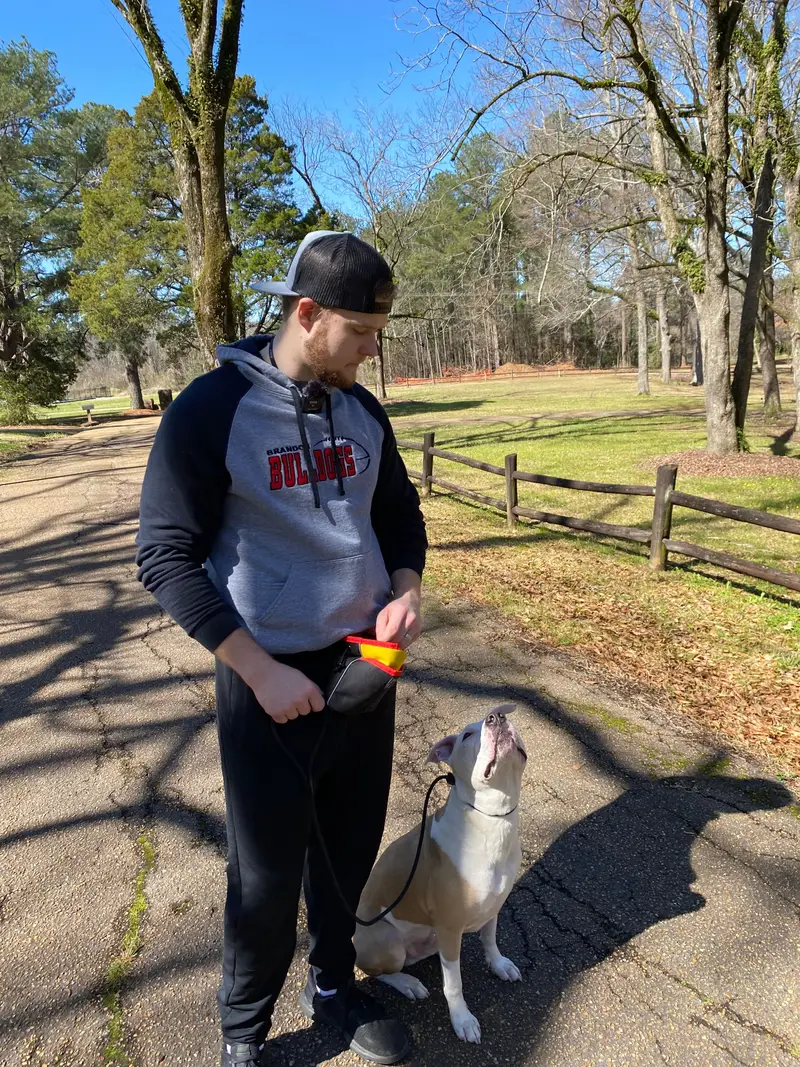
Every aggression case is handled by Bailey Clark himself, not a junior trainer, and aggression and reactivity make up a large share of the dogs we work with, because most families call us once a problem has already happened and they need help now. Bailey is an associate member of the International Association of Canine Professionals (IACP), trained through the Will Atherton Academy's professional program, has done coursework with Larry Krohn on rehabilitating aggressive dogs, and is trained by E-Collar Technologies to fit and teach remote collars. Clark's Canine Training LLC is BBB Accredited and fully insured, including dogs in board and train.
How it works
The Process, Step by Step
01
Evaluation and safety plan
We assess the dog, identify the type of reactivity or aggression, and set up management so nothing is rehearsed while we work.
02
Foundation and engagement
Obedience and focus that give your dog a job to do around triggers.
03
Controlled exposure
Gradual work around dogs, people, and situations at a level the dog can succeed at, then closer.
04
Owner handling and maintenance
You learn to handle, read, and advocate for your dog so the results last.
Real Results
Reactive & Aggressive Dog Training: What Clients Say
“We reached out to Bailey Clark after a frightening and unexpected situation when our dog Buddy bit a family member. Buddy was a stray my daughter found at around 9 months old. He had always been incredibly sweet and cuddly with us, but he was terrified of other people and often reacted with aggression and defensiveness toward strangers. Buddy was a challenge, to say the least — but Bailey met that challenge with patience, skill, and compassion. He didn't just work diligently with Buddy; he worked just as intentionally with us. Bailey taught us how to properly handle and train Buddy, how to prevent aggressive reactions, how to walk him calmly and obediently at our side, and how to help Buddy focus on us for guidance and approval instead of immediately reacting to people around him. Buddy did not make the process easy, but the transformation has been nothing short of amazing — not only in Buddy's behavior, but in how we understand, communicate with, and support him. Bailey truly changed our lives by helping us build trust, confidence, and clarity with our dog. I cannot recommend Bailey and Clark's Canine Training enough. He didn't just help Buddy — he helped us, and that made all the difference.”
“Our dog is a rescue and for 3 years she would bite and attack our other dogs, even sending one to the emergency vet. After one of her "episodes" we called Bailey and told him we were on the verge of giving her back to the rescue. We had tried meds and didn't know what else to do. Bailey came and did an assessment and said she was resource guarding and needed a leader. Bailey worked with us and her for 6 weeks. We learned so much from him. Our dog went from being a dog on medication fighting with our other dogs once a week, to a dog on no medication and only a minor hiccup in two months. Since training she has continued to improve. We can't recommend Bailey enough!”
FAQ
Reactive & Aggressive Dog Training Questions
Do you take dogs that have bitten someone?
Yes. Dogs with bite histories are accepted after an in-person evaluation. We will be honest about what we see, the risks, and what a realistic outcome looks like for your dog.
Is board and train or private lessons better for an aggressive dog?
It depends on the dog and the household. Board and train lets us do the intensive foundation work consistently; private lessons keep you in the loop from day one. Many aggression cases combine a board-and-train stay with owner lessons afterward. The evaluation decides it.
Should my dog stay on behavior medication during training?
When we are dealing with aggression, we prefer to work with dogs off medication whenever possible. A medicated dog can be dulled or dazed, which hides the dog's true state, and we need to see what the dog really does in order to fix it. Some medications have to be tapered gradually, so never stop one abruptly; we plan any reduction with your veterinarian. Several of our clients came to us with dogs on medication and, once training changed the behavior, no longer needed it.
Do you use e-collars on reactive dogs?
When appropriate, yes, after the dog has been taught what the collar means. Used correctly it gives a dog freedom and a clear way to interrupt a reaction before it escalates. It is never the first tool we reach for and it is never used to punish fear.
Can an aggressive dog be cured?
With the right approach, yes, in many cases. We have taken dogs with long bite histories to being reliable off leash and able to be around people and other dogs completely normally. Every aggression case is different, though, and expectations change from dog to dog. We will tell you what we think is realistic after the evaluation, and sometimes we need to get further into training before we can give a more certain answer.
How long does aggressive dog training take?
Most aggression and reactivity programs run 4 to 8 weeks, either as private lessons or as a board and train stay followed by owner lessons, with lifetime follow-up support. Severe or long-standing cases can take longer, and you will know the plan before you commit.
Why do you use a bite suit instead of a muzzle?
A muzzle keeps everyone safe but hides what the dog would really do. In a full bite suit, Bailey can see the dog's actual intentions without restricting it, and the dog can learn safely that biting people does not make them go away. Muzzle conditioning is still part of some plans when it fits the dog.
Isn't balanced training harsh on a fearful dog?
No. Most of what a fearful dog learns with us is earned through reward, structure, and confidence building. Consequences are only used once a dog clearly understands what is being asked, they are never used to punish fear, and every tool is introduced gently and explained to you first. The goal is a calmer, more confident dog that trusts its handler.
Do you help with fights between dogs in the same house?
Yes. Dog-on-dog aggression inside the home is one of the most common cases we see, often driven by resource guarding or a lack of structure. We set up separation and management right away, then rebuild calm routines so the dogs can share the home safely.
What areas do you serve for aggressive dog training?
In-home lessons cover Brandon, Flowood, Pearl, Richland, Florence, Jackson, Madison, Ridgeland, Clinton, and Byram. Board and train families come from across Mississippi and from out of state.
More questions? Read the full FAQ or call 601-751-8840.
Related programs
Board and Train
Your dog lives and trains with Bailey for four to eight weeks, then you learn to maintain the results. Includes weekly progress videos and lifetime follow-up lessons.
View Board and TrainPrivate Lessons
Weekly one-on-one lessons in your home or out in the real world. You learn to handle your own dog, with recorded sessions to review between visits.
View Private LessonsObedience & Real-World Manners
Loose-leash walking, reliable recall, place, thresholds, and an end to jumping and counter surfing. Built and proofed around real distractions.
View Obedience & Real-World MannersServing Brandon, Flowood, Pearl, Rankin County, and the Jackson metro.
Ready to Stop Managing and Start Living?
Your free evaluation is the first step. No obligation, no pressure. Just an honest conversation about your dog and what's possible.